
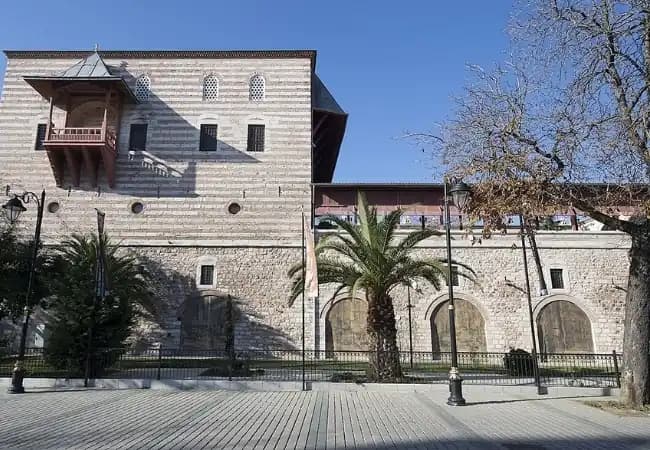
Turkish and Islamic Arts Museum Guided Tour
The finest collection of Islamic art in Turkey, housed in the palace of İbrahim Pasha on the west side of the Hippodrome, directly facing the Blue Mosque.
- At the gate
- £17
- Allow
- 1h 30m
- District
- Sultanahmet
- Closed
- Open daily
The museum, in short
The finest collection of Islamic art in Turkey, housed in the palace of u0130brahim Pasha on the west side of the Hippodrome, directly facing the Blue Mosque.
Its carpet collection is the reason specialists come u2014 one of the most important in the world, including Anatolian pieces from the 13th century onwards that survive nowhere else.
Opening hours
Generally 09:00 to 17:30 daily, with reduced hours on public holidays.
What it costs
Walk-up entry is u20ac20 and ticket queues get long in peak season. Entry with a guided tour is included on the pass.
Getting there
Take the T1 tram to Sultanahmet. The museum is a two-minute walk across the Hippodrome, opposite the Blue Mosque.
How long to allow
Around 30 minutes on your own. The guided tour is a 20-minute orientation, after which you are free to go back round at your own pace u2014 which is the sensible way to do it.
The building itself
u0130brahim Pasha Palace is the largest private residence ever built in the Ottoman Empire. It was given by Su00fcleyman the Magnificent to his Grand Vizier and childhood friend, u0130brahim Pasha, in the 16th century.
u0130brahim was executed on Su00fcleyman's orders in 1536 and his property was seized by the state. The palace passed to subsequent Grand Viziers, and its position overlooking the Hippodrome meant it doubled as a reviewing stand for imperial ceremonies.
Frequently asked questions
- It is the largest private residence ever built in the Ottoman Empire, standing on the Hippodrome directly opposite the Blue Mosque.
- In the 16th century, during the reign of Su00fcleyman the Magnificent, for his Grand Vizier u0130brahim Pasha.
- He was executed in 1536 and his wealth and property were confiscated by the state. The palace became the seat of later Grand Viziers.
- The carpets u2014 one of the world's most important collections, with Anatolian examples from the 13th century onwards u2014 alongside calligraphy, woodwork and metalwork.